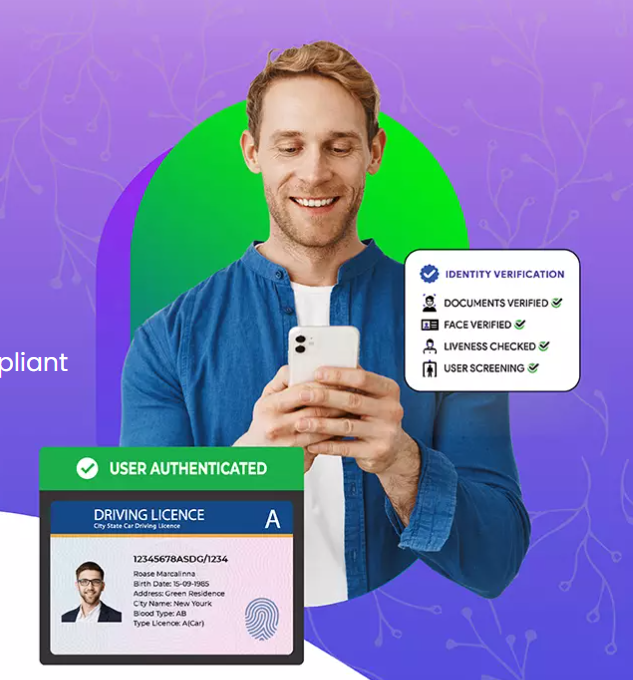
As digital services continue to expand, businesses need reliable ways to verify that users are genuine and not fraudulent. Traditional passwords and basic identity checks can be vulnerable to credential theft, impersonation, and sophisticated spoofing attempts. Technologies such as a face liveness detection API and voice verification system provide an additional layer of biometric security by helping organizations confirm the presence and identity of real users.
A face liveness detection API is a technology that analyzes facial information to determine whether the person interacting with a digital platform is physically present. Instead of simply matching a face with an existing photograph, liveness detection looks for indicators that distinguish a live person from presentation attacks such as photographs, videos, masks, or other manipulated representations.
When integrated into websites, mobile applications, onboarding platforms, or verification workflows, the API can perform automated liveness checks during authentication or identity verification. This can help organizations reduce exposure to fraudulent attempts while maintaining a convenient digital user experience.
Facial recognition alone may not always be sufficient for secure authentication. An attacker could potentially attempt to present a photo or recorded video of another individual. Liveness detection addresses this challenge by introducing additional checks designed to determine whether the facial input comes from a live person.
Organizations can use liveness technology for digital onboarding, financial services, KYC processes, account recovery, remote authentication, and other applications where establishing user presence is important. A well-designed implementation can also help reduce unnecessary manual verification and streamline customer journeys.
A voice verification system uses biometric characteristics in a person's voice to help verify their identity. Instead of relying only on what a user says, voice biometrics can analyze distinctive characteristics within speech and compare them with a previously enrolled voice profile.
Voice verification can be incorporated into customer authentication, contact centers, financial services, access control, and digital applications. Depending on the implementation, the system may use a spoken phrase or natural conversation as part of the verification process.
Using multiple biometric modalities can provide a broader identity verification framework. A face liveness detection API can help establish that a live person is present, while a voice verification system can provide an additional biometric signal associated with the user.
This multimodal approach can be particularly useful for applications where stronger identity assurance is required. Instead of depending on a single authentication factor, organizations can combine facial and voice signals within a carefully designed verification workflow.
Face liveness detection and voice verification can support several business use cases, including remote customer onboarding, KYC verification, account protection, digital banking, employee authentication, telehealth platforms, and online services.
For organizations, API-based biometric solutions can also simplify integration with existing applications. Developers can connect verification capabilities to established workflows without necessarily redesigning the entire authentication infrastructure.
As identity fraud techniques evolve, businesses need authentication technologies that can adapt to changing security requirements. A face liveness detection API combined with a voice verification system can help create a layered biometric verification process that balances security, automation, and user convenience.
When implemented with appropriate privacy safeguards, consent mechanisms, secure data handling, and risk-based authentication policies, facial and voice biometrics can become valuable components of a modern digital identity strategy. These technologies help organizations move beyond conventional credentials toward more robust and intelligent identity verification experiences.

This post has been authored and published by one of our premium contributors, who are experts in their fields. They bring high-quality, well-researched content that adds significant value to our platform.