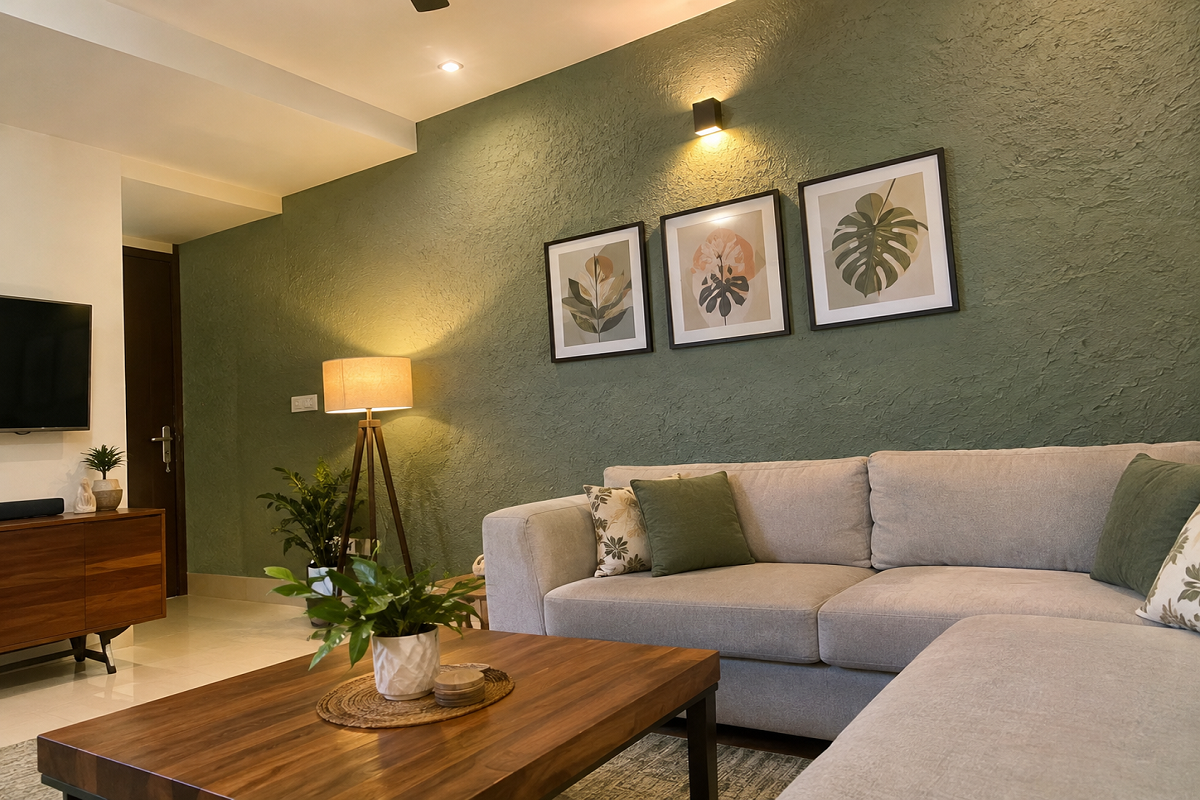
Flat, single-colour walls have their place, but increasingly, homeowners in Chennai are turning to texture painting to add depth, warmth and a sense of design intent to their homes without touching the layout or furniture. A textured accent wall behind a bed, a stone-effect finish in a living room, or a subtle fabric-like texture in a study can change how a room feels far more dramatically than a colour change alone. But texture work comes with its own set of considerations, particularly around cost, maintenance and where it works best.
Unlike standard flat or matte painting, texture finishes involve specialised techniques, textured rollers, trowels, stencils or applied compounds that create a three-dimensional surface effect. This could range from a subtle sandy or suede-like finish to bolder effects like stone, concrete or metallic textures. Because these techniques require a different skill set and more application time than a standard flat coat, texture painting cost is understandably higher than plain wall painting.
As a rough guide, texture or designer paint work in India generally starts around Rs 25 per square foot and can go considerably higher depending on the complexity of the finish, the brand of texture compound used, and the size of the area covered. This sits above standard premium finish painting, which typically ranges from about Rs 18 to Rs 25 per square foot. When comparing Home Painting Services, it is also useful to check whether texture application, surface preparation, and finishing are included in the quoted price.
The exact texture paint cost per sq ft in your project will also depend on whether it's a single accent wall or an entire room, since smaller areas often carry a higher effective rate due to setup and material wastage.
Texture finishes tend to have the most visual impact when used selectively rather than across an entire home. A single accent wall in a living room, bedroom headboard wall or entryway allows the texture to stand out as a design feature rather than becoming visually overwhelming.
Full-room texture application is possible but significantly increases both the texture painting cost and the time needed, so it's worth considering whether one striking wall might achieve the effect you're looking for at a fraction of the investment.
Textured surfaces are more difficult to clean than flat paint since dust and marks can settle into the grooves and ridges, and spot touch-ups are trickier to blend seamlessly compared to a flat colour.
For this reason, texture painting is generally better suited to lower-traffic areas like bedrooms, living room accent walls or study spaces, rather than kitchens, children's play areas or hallways that see frequent contact and need regular cleaning. It's worth discussing durability and cleaning requirements with your painter before committing to a finish for a high-traffic zone.
With hundreds of texture ideas now available, from subtle tonal variations to bold three-dimensional effects, it helps to narrow choices based on room lighting and size rather than trends alone. Darker, heavier textures can make a small room feel closed in, while lighter, subtler textures tend to work well in most spaces without overwhelming them. Larger rooms with good natural light can generally handle bolder textures and richer colour combinations. Viewing physical samples on your actual wall, under your home's specific lighting, is far more reliable than judging texture from a catalogue photo or a showroom sample board.
Because texture work is priced differently from standard painting, it's important to get a specific, itemised quote for any texture element in your project rather than assuming it's included in a general wall painting price.
Ask your painter to specify the wall painting cost for texture separately from flat painting, confirm what's included in terms of base coat preparation, and clarify how touch-ups will be handled if the finish gets damaged later. A written estimate that separates texture and flat painting costs makes it much easier to adjust your plan if the budget needs trimming, without having to renegotiate the entire project.
With flat painting, minor inconsistencies in technique are often forgiving and easy to smooth over. Texture work is far less forgiving: uneven pressure, inconsistent trowel strokes or rushed drying between layers can leave visible patchiness that is difficult to correct without redoing the wall entirely.
This makes the skill and experience of the painter applying the finish even more important than with standard painting, and it's worth specifically asking whether the team assigned to your project has hands-on experience with the particular texture technique you have chosen, rather than assuming all painters are equally comfortable with specialised finishes.
Texture painting can genuinely transform how a room feels, adding character that flat colour alone cannot achieve. But because it comes at a premium and requires more upfront planning around placement, maintenance and cost, it rewards homeowners who research the texture paint cost per sq ft, choose accent locations thoughtfully, and get a clear, itemised estimate before work begins. Done selectively and well, texture painting is one of the most effective ways to make a home feel distinctive without a full renovation.

This post has been authored and published by one of our premium contributors, who are experts in their fields. They bring high-quality, well-researched content that adds significant value to our platform.