This guide explains SPC vs LVT flooring in plain terms: how the cores are built, how each performs against heat, water and heavy furniture, and which one makes sense in a UAE home. You will finish knowing exactly which type to ask for and why.
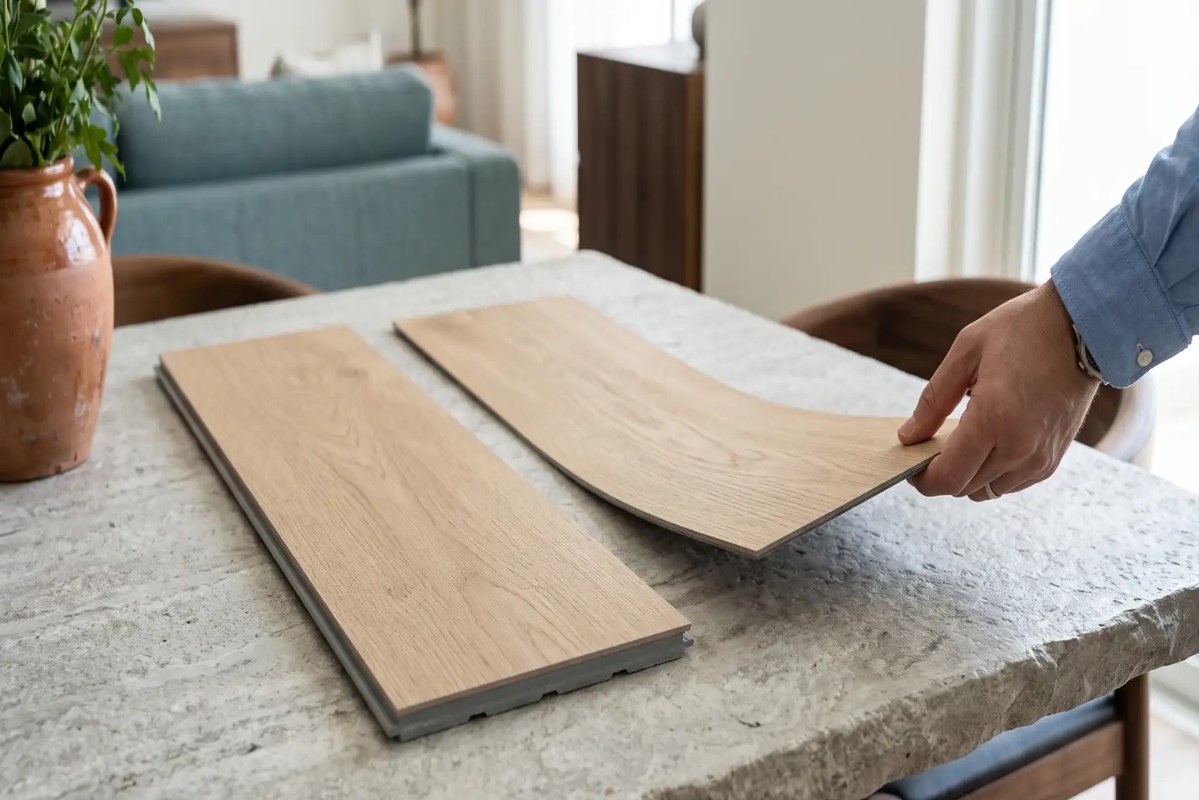
The difference is the core. SPC has a rigid stone plastic composite core and clicks together as a floating floor. Traditional LVT is thinner and flexible, and is usually glued down.
Both carry the same printed design layer and clear wear layer on top, so they can look identical. Underneath, they behave very differently. In the SPC vs LVT flooring decision, the rigid core wins most UAE installations, which is why the rigid ranges at Floorna are the ones most customers choose.
SPC stands for stone plastic composite. The core combines limestone powder with PVC and stabilisers, producing a dense board that does not flex, dent easily or swell with water.
It clicks together without adhesive and bridges minor subfloor imperfections. Our guide on what is SPC flooring covers the layers in detail.
Traditional luxury vinyl tile is built from flexible vinyl layers, typically 2 to 3 mm thick. It is soft underfoot and quiet, but because it bends it must be glued to a perfectly smooth subfloor, and any bump underneath eventually shows through. For the background on this format, see our overview of LVT luxury vinyl tile.
The same core logic applies when comparing SPC vs vinyl flooring more broadly.
In SPC vs LVT flooring for UAE homes, the rigid core is the better fit. Strong sun through large windows, constant air conditioning and high humidity all stress flooring, and a rigid core stays dimensionally stable where flexible vinyl can expand, curl or telegraph joints.
The ability to click straight over existing tiles also removes demolition from most renovations. Flexible glue-down LVT still suits commercial spaces with perfectly prepared screeds and rolling loads, where a bonded floor is preferred.
Rigid LVT is the category SPC belongs to: a luxury vinyl surface on a rigid, click-together core. Our Bergo rigid luxury vinyl tiles come in straight planks, herringbone and concrete finishes at 5.5 mm, supplied at 140 AED per square metre or 180 AED installed with skirting.
Gerflor Virtuo 30 Rigid, at 5.4 mm, is supplied at 160 AED per square metre or 195 AED installed with skirting.
The SPC vs LVT flooring question comes down to the core. Choose a rigid core for homes, renovations over tiles and rooms exposed to heat and humidity.
Choose flexible glue-down LVT only for prepared commercial screeds. Order free samples of our rigid ranges, feel the difference in your own room, and use our online visualiser to preview the finish before you decide.
For most UAE homes, yes. The rigid SPC core is more stable in heat and humidity, resists dents better and clicks over existing tiles without glue. Flexible LVT is slightly softer underfoot but needs a perfectly smooth subfloor.
The core is waterproof and will not swell, which makes SPC suitable for kitchens and residential bathrooms. Water can still reach the subfloor through perimeter gaps, so edges near baths and sinks should be sealed at installation.
Yes. Because the core is rigid, SPC lays as a floating floor over sound, level tiles. Shallow grout lines are fine, while deep or uneven joints need levelling first.
Both carry a wear layer that governs surface scratching. SPC is more durable against dents from heavy furniture and against movement from temperature change, which is why it lasts better in most residential settings.

This post has been authored and published by one of our premium contributors, who are experts in their fields. They bring high-quality, well-researched content that adds significant value to our platform.