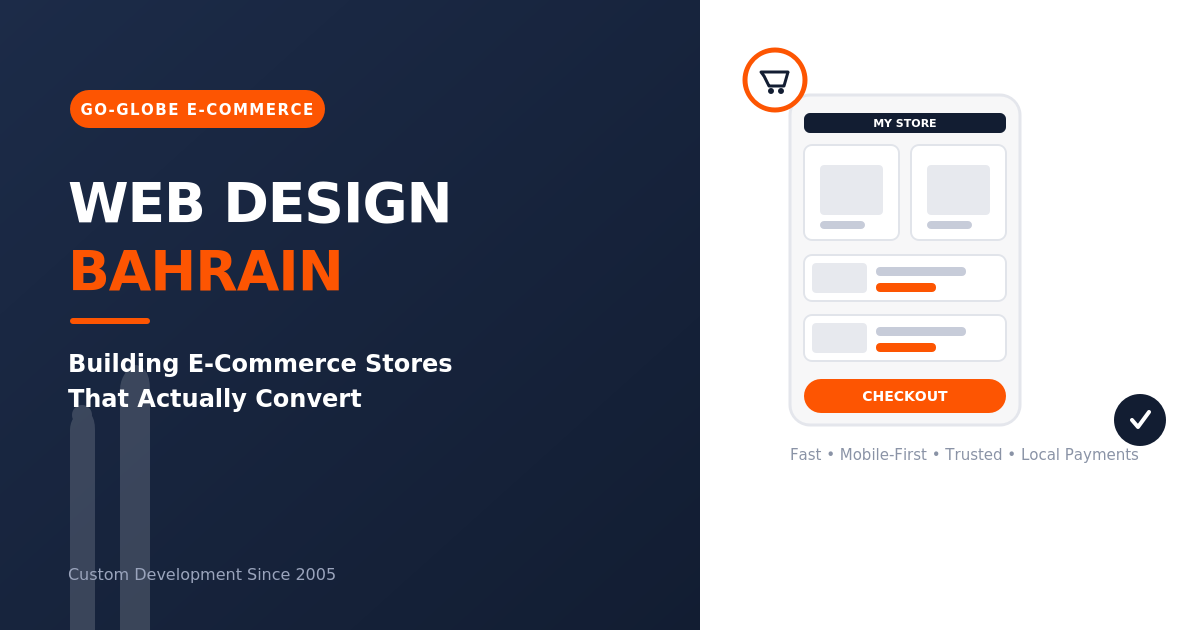
A busy online store means nothing if shoppers leave before checkout. This is the reality behind most failed e-commerce launches in Bahrain: traffic arrives, but sales never follow. The gap between visits and purchases almost always comes down to one thing, design that was never built to convert.
After two decades of building online stores, I have watched the same pattern repeat. A business invests in ads, gets clicks, and still sees a low conversion rate. The website looks fine. It just does not sell. Good web design Bahrain businesses can trust is not about looking modern. It is about removing every barrier between a visitor and a completed order.
This guide walks through the exact design decisions that turn browsers into buyers. Whether you sell abayas in Manama, electronics in Riffa, or gourmet food across the Gulf, these principles apply directly to your store.
Bahrain's online shopping market is small but sharp. Shoppers compare prices across regional and international stores within seconds. They expect fast delivery, secure payment, and a smooth mobile experience, because they already get that from the biggest names in the region.
A poorly designed store does not just lose a sale. It loses trust, and that shopper rarely comes back. Strong web design Bahrain teams build for this reality from day one, treating every page as a step in a sales conversation, not just a digital catalog.
Speed is the first conversion factor, and most stores fail it before a visitor sees a single product. Every extra second of load time pushes conversion rates down.
Fix this with a few core habits:
A store that loads in under three seconds keeps shoppers browsing instead of bouncing. This single fix often lifts conversions more than any redesign.
Most shopping traffic in Bahrain comes from phones, not desktops. If checkout feels clunky on a small screen, sales disappear before they happen.
A mobile-first store needs:
Build the mobile experience first, then adapt it for desktop. Stores built the other way around almost always feel awkward on a phone, and that awkwardness costs sales.
Checkout is where most e-commerce website design projects lose sales. Every extra field, every forced account creation, and every confusing step gives a shopper a reason to abandon the cart.
Reduce friction with these steps:
A one-page checkout with clear steps can recover sales that a cluttered, multi-page process quietly loses every day.
A product page has one job: answer every question a shopper has before they hesitate. Weak product pages force people to search elsewhere for details they should have found on your site.
Strong product pages include:
Written well, a product page does the work of a salesperson, answering objections before they are ever raised.
As a catalog grows, so does the risk of losing shoppers in it. A visitor who cannot find what they want within a few seconds leaves, often for good.
Support this with:
Good search design shortens the path from landing page to checkout, which is exactly what a conversion-focused store needs.
Online shoppers in Bahrain are cautious, and rightly so. Trust has to be earned on every page, not just the homepage.
Build trust through design with:
These elements are small design choices with a large impact. A shopper who feels safe is far more likely to complete a purchase.
A store that only accepts international cards loses customers who prefer familiar, local payment options. Offering the right mix builds both trust and convenience.
At minimum, support:
This is one of the most overlooked parts of online store Bahrain design, and one of the fastest to fix with the right payment integration.
A large share of Bahrain's shoppers browse and buy in Arabic, while others prefer English. Building for only one language is one of the most common web design mistakes online stores make, and it narrows the market before a single ad is even run.
A well-designed bilingual store includes:
Bilingual design is not just a courtesy. It directly expands the pool of shoppers who can comfortably buy from your store.
An e-commerce site with strong web design Bahrain foundations should also help products get found on Google, not just look good once a visitor arrives.
Support this with:
This turns your store into a source of ongoing traffic, not just a destination for ads.
Most shoppers who add a product to their cart do not complete the purchase on the first visit. Good design plans for this instead of ignoring it.
Support cart recovery with:
A store designed with recovery in mind turns near-misses into completed sales over time, rather than losing them permanently.
Winning a first order costs far more than earning a second one, yet many stores design only for that initial purchase. A conversion-focused site should make it just as easy to come back.
Support repeat business through design with:
A store built this way turns a single transaction into an ongoing relationship, which matters more in a small, competitive market like Bahrain's.
Even well-funded stores repeat the same avoidable errors:
Each mistake is fixable at the design stage, and far cheaper to fix before launch than after.
How long does it take to build a conversion-focused e-commerce store in Bahrain? A well-planned store typically takes six to twelve weeks, depending on catalog size, payment integrations, and bilingual requirements.
Does a Bahrain e-commerce store need an Arabic version? In most cases, yes. Supporting Arabic with proper right-to-left layout reaches a significantly wider, more comfortable shopping audience.
What is the single biggest design factor for conversions? Checkout simplicity. Reducing steps and offering guest checkout consistently recovers more sales than almost any other single design change.
Building a store that converts is not about adding more features. It is about removing friction at every step, from the first product image to the final payment click. Speed, mobile usability, trust signals, and a simple checkout are not optional extras. They are the foundation of any e-commerce site that actually sells.
For Bahrain businesses ready to turn their online store into a real sales channel, working with a team that understands both design and conversion is essential. GO-Globe has delivered custom, conversion-focused e-commerce web design solutions since 2005, helping businesses across Bahrain and the wider Gulf build stores that shoppers trust and complete purchases on. If your store gets traffic but not enough sales, that is exactly where the right design partner makes the difference.

This post has been authored and published by one of our premium contributors, who are experts in their fields. They bring high-quality, well-researched content that adds significant value to our platform.