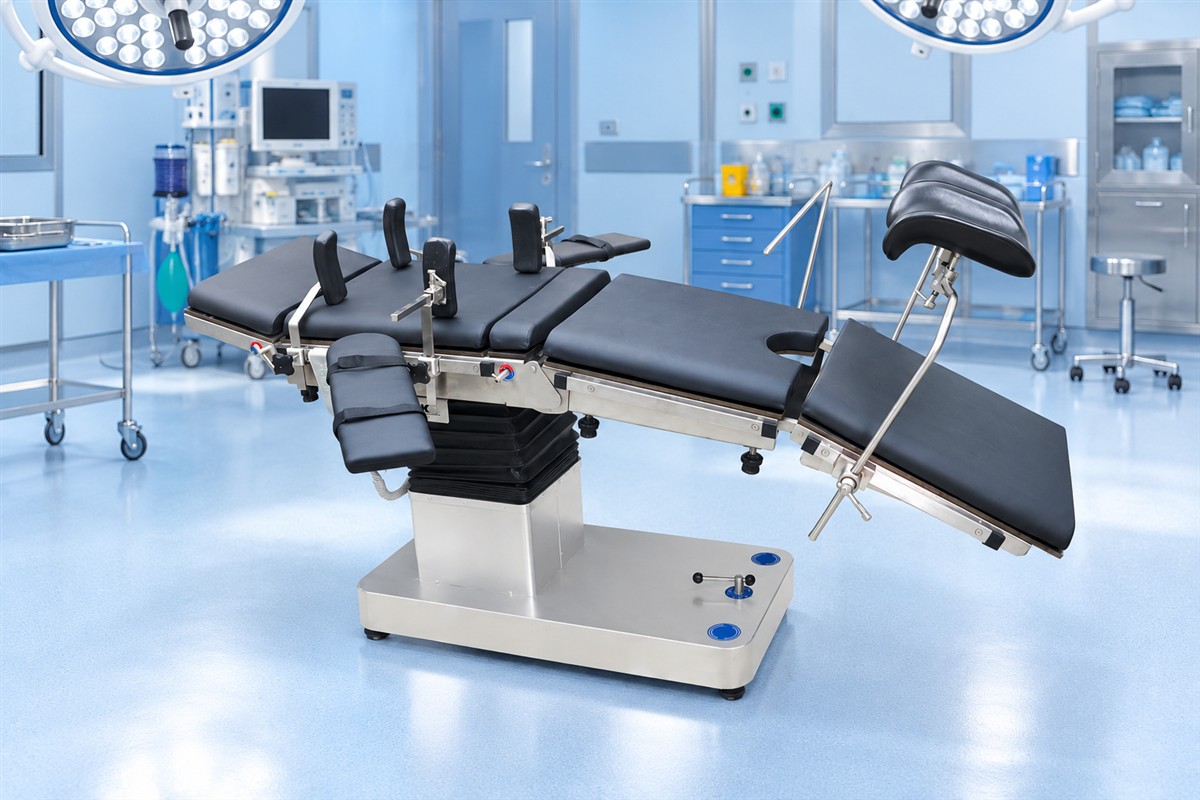
A hydraulic OT table can be considered for a variety of hospital settings, but the drive-system label does not describe the complete product. Buyers still need to understand which movements are hydraulic or mechanical, what accessories are included and how the particular model is maintained. These details belong in the purchasing discussion from the beginning.
When reviewing hydraulic OT table manufacturers in Delhi, a useful approach is to work through the table's expected ownership cycle. Delivery, daily operation, cleaning, planned maintenance and repair all create responsibilities. A clear offer explains those responsibilities as well as the purchase price.
Product images from Ventek India
Ask the supplier to describe each adjustment on the proposed table and the control used to make it. The word hydraulic may refer to one part of a system rather than every movement. Record how height and other supported adjustments are made, using the manufacturer's own descriptions.
During a demonstration, ask trained representatives to show the specified controls and the sequence described in the operating instructions. The hospital's clinical and engineering teams should assess the arrangement for their intended use. Avoid assuming that a familiar control layout means two tables have the same functions or operating limits.
Obtain a list of the tabletop sections, mattress, rails, supports and other accessories supplied with the quoted model. Check which items are standard, which are optional and which must be ordered separately. Ask for part or model identifiers where this will help future ordering.
A hospital may be comparing several surgical table manufacturers in Delhi while also trying to reuse older attachments. That requires a compatibility assessment, not a visual comparison. The manufacturer should confirm which combinations are approved and provide the relevant instructions and limits. Keep this confirmation with the equipment file.
Request the routine inspection and maintenance requirements for the exact table. Establish which checks are intended for users and which must be performed by trained service personnel. The hospital should allocate these activities through its own biomedical or engineering process.
Ask the supplier how planned maintenance is arranged and recorded. Clarify whether the quoted warranty includes scheduled visits, only corrective repairs or a different scope. The term comprehensive needs an explanation: labour, travel, parts, consumables and exclusions should be described separately. A clear scope is easier to budget than an attractive adjective.
Request the process for identifying and ordering replacement parts. The hospital should know which organisation receives a fault report, who decides whether an engineer is needed and how the estimated repair plan is communicated. Ask what happens if a component is unavailable or a repair requires workshop work.
Do not ask staff to improvise repairs, substitute hydraulic fluids or modify fittings on the basis of a general article. Those decisions depend on the product instructions and qualified service advice. The buying objective is to establish an approved support route before a problem occurs.
Choose a comparison period that suits the hospital's planning process and apply it consistently to every offer. Start with equipment, accessories, delivery and commissioning. Then add the maintenance and service costs that can reasonably be identified from written proposals. Keep estimates separate from contractual prices.
If an annual maintenance arrangement is offered, record its start date, scope and renewal basis. Include any known exclusions without assuming that all future repairs can be predicted. The Ventek operating table catalogue can help purchasers specify the model and accessory combination they want priced, rather than requesting a generic table rate.
Agree the acceptance requirements before delivery. The hospital should check the supplied configuration, relevant documentation, operating controls and any other items identified by its technical team. Record outstanding work and the responsibility for closing it. Retain serial numbers and service contacts in an accessible equipment record.
Training should include the people who operate and care for the table, with the manufacturer's instructions available for reference. When choosing an OT table manufacturer in Delhi, give weight to the clarity of this handover and the support arrangements behind it. A documented ownership plan makes the purchase easier to manage after the initial installation is complete.

This post has been authored and published by one of our premium contributors, who are experts in their fields. They bring high-quality, well-researched content that adds significant value to our platform.